
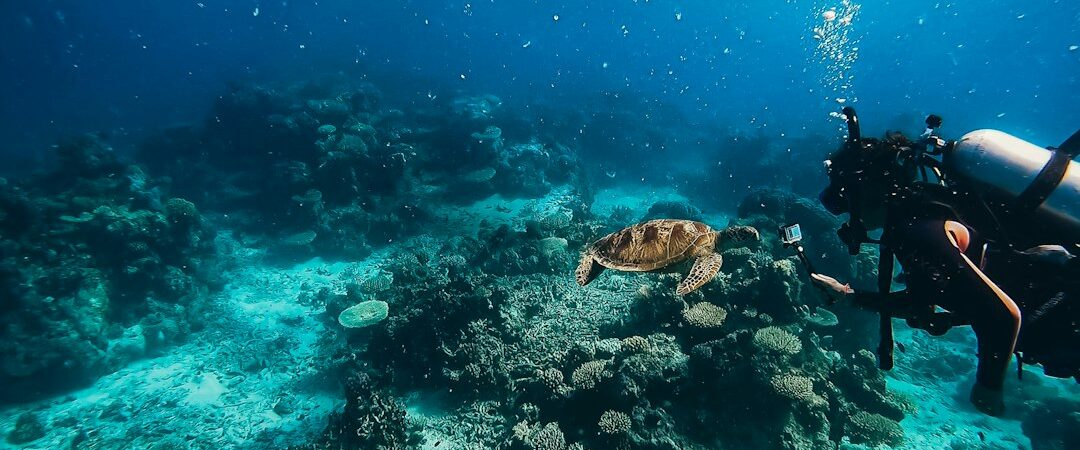
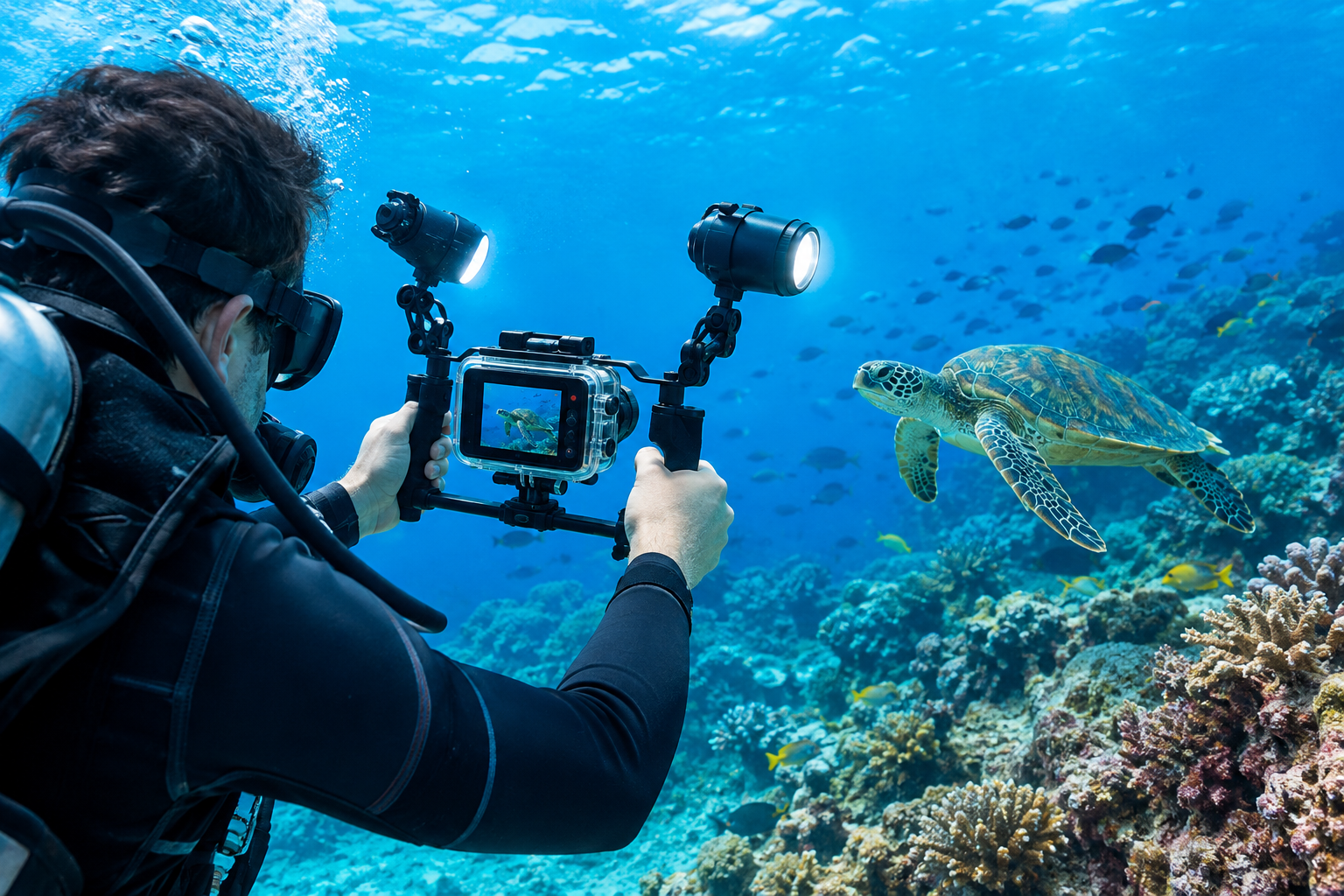
Underwater video equipment allows you to capture marine life, diving adventures, swimming activities, underwater landscapes, and other scenes that are difficult to record with standard cameras.
Choosing the right equipment depends on where and how you plan to record, the depth you need to reach, image quality, lighting conditions, and how easy the equipment is to use.
What Is Underwater Video Equipment?
Underwater video equipment includes cameras and accessories designed to record video beneath the surface of the water. Depending on the product, this can include waterproof action cameras, underwater cameras, camera housings, underwater lights, mounts, filters, and other accessories.
Some equipment is designed for casual swimming and snorkeling, while other solutions are intended for diving and more demanding underwater environments.
What to Consider When Choosing Underwater Video Equipment
Waterproof Depth
Check the maximum depth at which the camera or housing can safely operate. A device suitable for swimming may not be suitable for scuba diving.
Always check the manufacturer’s specified depth rating rather than assuming that a product is waterproof simply because it is marketed for underwater use.
Video Resolution
Higher-resolution cameras can capture more detailed footage and provide additional flexibility when editing or cropping video.
Common options include:
-
Full HD video
-
4K video
-
Higher-resolution recording on selected models
The appropriate resolution depends on how you intend to use the footage and what devices you will use to view or edit it.
Low-Light Performance
As you go deeper underwater, less natural light reaches the camera. This can make colors appear less vivid and footage darker.
A camera with good low-light performance can help, while underwater lighting can be particularly useful for deeper dives or darker environments.
Image Stabilization
Movement from swimming, diving, or water currents can make footage shaky. Image stabilization can help produce smoother video, especially when the camera is handheld or mounted to diving equipment.
Camera Size and Weight
Compact equipment is generally easier to carry while swimming or diving. Larger setups may provide additional features but can be more difficult to handle underwater.
Consider how much equipment you are comfortable carrying during your activities.
Underwater Camera Housings
A camera housing can protect a compatible camera from water while allowing you to operate important controls.
When choosing a housing, check:
-
Maximum rated depth
-
Camera compatibility
-
Button and control access
-
Sealing system
-
Size and weight
-
Lens compatibility
-
Compatibility with lighting and mounting accessories
A housing designed for one camera model should not automatically be assumed to work with another.
Underwater Lighting
Natural light decreases as depth increases, and water can affect the appearance of colors. Underwater lights can provide additional illumination and help reveal details in darker environments.
Lighting equipment can be particularly useful for:
-
Diving
-
Caves and darker environments
-
Close-up subjects
-
Marine life
-
Underwater photography and video production
When selecting a light, consider its brightness, battery life, beam angle, mounting system, and depth rating.
Mounts and Accessories
Mounting accessories can make it easier to position the camera while keeping your hands available for other activities.
Depending on the setup, useful accessories may include:
-
Handle grips
-
Chest mounts
-
Head mounts
-
Tripods
-
Flexible mounts
-
Extension arms
-
Camera trays
-
Light mounts
-
Floating handles
Make sure accessories are compatible with both the camera and the intended underwater environment.
Who Can Benefit From Underwater Video Equipment?
Underwater video equipment can be useful for different types of users.
Snorkelers
Compact waterproof cameras can make it easier to record shallow-water activities without carrying a large setup.
Divers
Divers may need equipment with a greater depth rating, reliable controls, stabilization, and compatibility with underwater lighting.
Travelers
Travelers may prefer compact equipment that can be used for swimming, snorkeling, beaches, and other outdoor activities.
Marine and Nature Enthusiasts
People interested in marine life may benefit from equipment that provides good image quality and performs well in changing underwater lighting conditions.
Content Creators
Creators producing travel, diving, educational, or nature content may want higher-resolution video, stabilization, external lighting, and additional mounting options.
Waterproof Camera vs. Camera Housing
These two approaches serve different purposes.
Waterproof camera:A camera specifically designed to operate underwater can provide a simple and compact solution.Camera with underwater housing:A compatible camera placed inside a dedicated housing can provide access to additional camera features and may be suitable for more advanced setups.
The better option depends on the camera you already own, the depth you need to reach, and the type of footage you want to create.
Important considerations
Before selecting underwater video equipment, check the following:
-
Maximum underwater depth
-
Video resolution
-
Stabilization
-
Low-light performance
-
Battery life
-
Camera and accessory compatibility
-
Housing depth rating
-
Lighting compatibility
-
Mounting options
-
Size and weight
-
Ease of operation underwater
Choosing Equipment for Your Needs
There is no single underwater video setup that is appropriate for everyone.
For casual swimming and snorkeling, a compact waterproof camera may provide the simplicity you need.
For regular diving, consider depth rating, stabilization, battery performance, controls, and compatibility with lights and mounts.
For professional or advanced underwater video, a compatible camera housing, dedicated lighting, mounting equipment, and higher-quality recording capabilities may be more important.
The most suitable choice depends on your activities, environment, experience, and the type of footage you want to capture.
Final Thoughts
Underwater video equipment makes it possible to record environments and experiences that ordinary cameras cannot easily capture. The right equipment should match the depth, conditions, activity, and level of video quality you require.
Before purchasing, compare the specifications carefully and make sure the camera, housing, lights, batteries, mounts, and other accessories are compatible with your intended setup.