
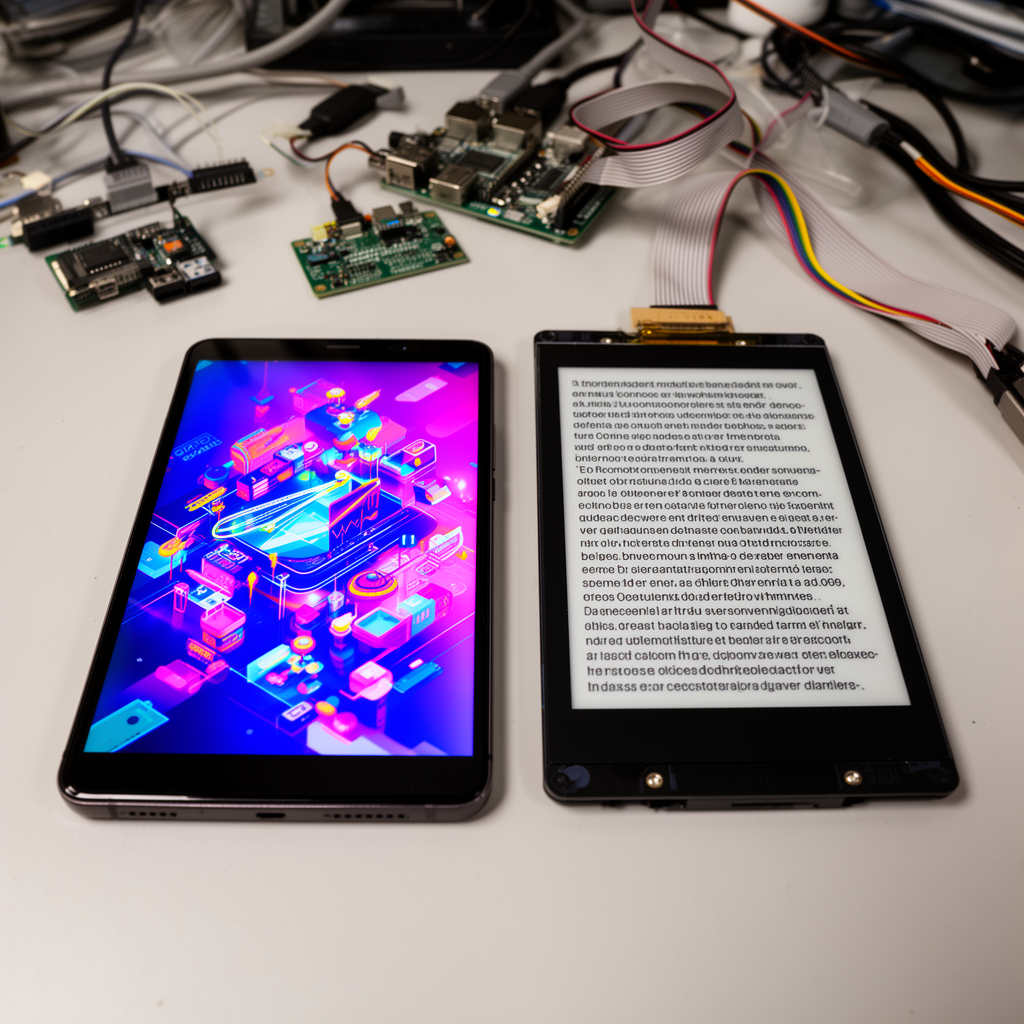
The display interface is often the single largest consumer of power and memory bandwidth in an embedded product. Designing an intuitive user interface requires choosing an optical technology that balances refresh rate responsiveness against energy limits. OLED modules provide vibrant colors and fast frame updates, whereas e-paper panels offer sunlight readability and zero power consumption for static visual content.
Refresh Performance and Visual Contrast
OLED panels feature self-emissive organic LEDs that deliver deep blacks and high contrast ratios across wide viewing angles. Because individual pixels illuminate independently, displaying fast-moving animations or real-time sensor graphs happens smoothly with sub-millisecond response times. E-paper screens rely on physical microcapsule movement under electric fields, resulting in slow refresh cycles and temporary screen flashing during page updates.
Energy Profiles Across Static and Dynamic Content
Power consumption patterns between these two technologies are fundamentally opposite. An OLED display consumes current continuously while powered on, with total draw scaling directly based on how many pixels are actively illuminated. An e-paper display draws zero power once an image is written to the screen, consuming energy only during the brief moment when the physical microcapsules shift position to display new data.
Matching Display Tech to Product Requirements
If your design requires continuous real-time readout updates or interactive touch menus, a compact SPI OLED module provides a sharp, responsive screen experience. For smart badges, weather stations, or asset trackers that update content once every few minutes, an e-paper display extends battery life from days to months while remaining perfectly readable in direct sunlight.