
AI Cybersecurity Risks Grow Alongside New Defensive Tools
Executive Summary: AI-powered tools are increasing attention on secure deployment, monitoring and incident response. This report separates the source-linked development from its wider technical implications and identifies what readers should verify next. [1]

Main Article
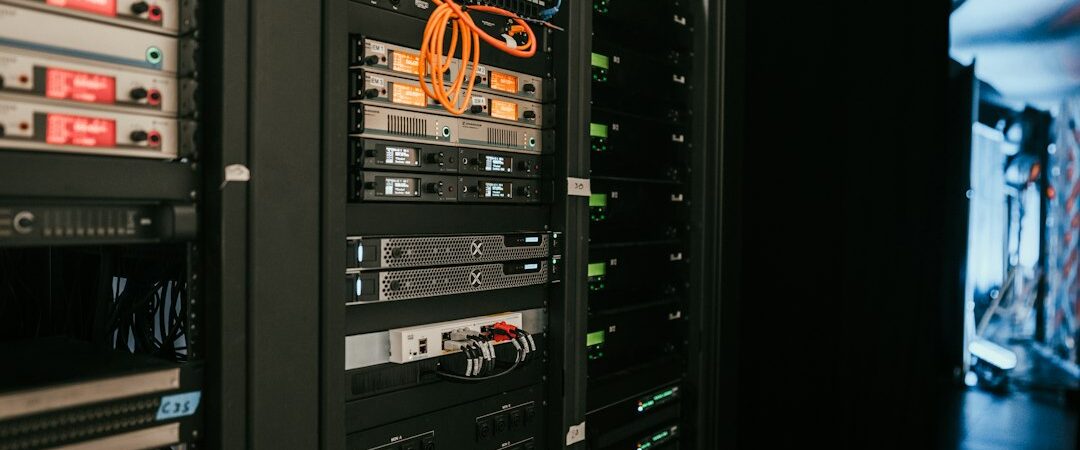
Artificial intelligence technology. Illustrative editorial image. Technology coverage has raised concerns about AI being used in cyberattacks while organisations also deploy AI to improve detection and response. Automated systems can analyse large volumes of security data, but they may accelerate phishing and social engineering too. Defenders still need access controls, patching, backups and incident response plans. AI changes the speed and scale of both attack and defence. Why this matters: the development is part of a wider shift in how technology companies design products, build infrastructure and compete for customers. In areas such as artificial intelligence, semiconductors, consumer electronics and space systems, progress depends on more than a single product announcement. Manufacturing capacity, software support, supply chains, energy use, reliability and the cost of deployment all influence whether a new approach can be adopted at scale. These factors help explain why industry announcements can affect suppliers, business customers and everyday device buyers in different ways. For consumers and organisations, the practical impact will depend on availability, final specifications, pricing and independent testing. A reported plan or forecast should not be confused with a completed launch or a guaranteed result. Readers should look for official technical documentation, product release details and follow-up reporting before making purchasing or investment decisions. Where the story concerns an emerging technology, early claims may change as prototypes are tested, production expands or regulators review the project. For security teams, the practical test is whether an AI tool improves detection without creating new exposure through sensitive prompts, data retention, excessive permissions, or automated actions. Companies increasingly combine hardware, software, manufacturing partners and cloud services to deliver performance improvements. That can create opportunities for faster products and new services, but it may also introduce trade-offs around compatibility, security, sustainability and dependence on a small number of suppliers. Competition and continued research will help determine which approaches become widely used and which remain specialised. SmartTechChoice will continue tracking follow-up announcements, practical availability and the wider implications for technology users. This article is an editorial summary of the linked reporting, not a claim that every projection has been independently confirmed. Readers should consult the original source for the full report, attribution and any subsequent corrections or updates. [1]
AI capability is constrained by the complete stack: accelerators, memory, networking, power, cooling, model quality, software compatibility and the cost of serving each request. A launch or investment announcement is not a substitute for reproducible benchmarks and workload-specific testing.
One distinction matters throughout this story: a forecast, partnership, procurement decision, prototype or early test has a different evidential status from a shipping product or a completed mission. The source cited below supports the reported development; broader technical observations in this article are editorial analysis and should not be mistaken for additional company guidance. Readers should look for updated documentation, performance measurements and confirmation of delivery milestones before drawing conclusions.
Key Takeaways
- The source-linked development is a signal of direction, not proof that every planned outcome has already been achieved. [1]
- Compatibility, cost, reliability and real-world workload performance matter alongside headline specifications.
- The next useful checkpoint is independent evidence: a technical release, production milestone, customer deployment or published test.
Expert Analysis
The industry impact depends on utilisation and deployment economics as much as headline model or chip performance. Buyers should watch interoperability, energy requirements, security controls and whether claimed benefits hold up in production workloads.
The security question is how AI changes attacker scale and defender response time. Organisations should evaluate false positives, prompt-injection exposure, identity verification and incident escalation alongside detection speed; an automated alert is not the same as a verified incident.
Industry Impact
For consumers, verify which features run locally, which require cloud access, what data is sent to providers, and whether the feature is available in your region and language. Marketing labels alone do not establish useful performance or privacy.
Suppliers and buyers should also track concentration risk, support lifetimes and integration costs. A technically promising option may still be difficult to adopt if it requires a new toolchain, specialist staff, a new supply contract or a change to existing systems. Those constraints can determine commercial success as much as peak performance.
What This Means for Consumers
For purchase decisions, compare the complete product rather than one headline feature. Check availability in your country, warranty terms, software and security-update commitments, compatibility with the devices you already own, and independent testing of the exact model. If the news is about an early-stage technology, there may be no immediate buying action to take.
Related Products
Browse related products and technology listings and explore the SmartTechChoice Product Catalog.
Related Categories
Explore related category content.
Related News & Recommended Reading
- AI Data Centres Put Electricity and Cooling at the Centre of Planning
- Data-Centre Debt Investors Reassess the Economics of the AI Boom
- Investors Scrutinise the Economics of AI Infrastructure
Related Reviews
Search SmartTechChoice for relevant product reviews. Review pages should compare the exact model, test conditions and date of publication.
Related Comparisons
Find related comparison content. A fair comparison should use equivalent configurations and clearly state where evidence is unavailable.
Related Buying Guides
Find relevant buying-guide content.
Related Diagnostics
Search troubleshooting and diagnostic content for compatibility checks and practical fault-finding.
Featured Image Recommendation
Subject: a cybersecurity operations room reviewing a simulated enterprise incident across endpoints, realistic monitors with no readable text. Style: credible editorial technology photography, realistic materials, restrained lighting, no brand logos, no text overlay, 16:9 landscape crop. Suggested Image brief: “Create a realistic, newsroom-quality editorial image illustrating a cybersecurity operations room reviewing a simulated enterprise incident across endpoints, realistic monitors with no readable text; technically plausible equipment and materials, clean composition, natural colour, fine detail, documentary photography, 16:9 landscape, no logos, no readable text, no exaggerated sci-fi effects.”
Multimedia Recommendations
- YouTube embed suggestion: search for “AI accelerator architecture and data-centre infrastructure” and embed only a relevant video from an official agency, manufacturer, university or clearly identified technical reviewer. Confirm the date and claims before embedding.
- Comparison table: Compare defensive approaches by detection coverage, response time, false positives, data access, human review and independent evaluation; do not equate vendor claims with proven outcomes.
- Specification box: list confirmed model, process, capacity, compatibility, power or mission status only where the source publishes it.
- Infographic: Map a security incident from initial lure or vulnerability through detection, containment, recovery and post-incident review, highlighting control points.
Poll
Poll question: What should matter most when evaluating this development: performance, reliability, cost, or long-term support?
Discussion Question
Which additional evidence would help you decide whether this development is genuinely useful, and what would you want an independent reviewer to test?
References
- AI Cybersecurity Risks Grow Alongside New Defensive Tools. Original source/report. https://www.ft.com/content/c78f18d3-fd4f-47ee-b34b-e5bdaa2fb9c6. Retrieved 19 October 2026. [1]
Research Methodology
This article is based on the linked primary or reported source available at the time of editing. Technical context is presented as analysis, not as a second source-backed claim. Where the source is a broad news index rather than a specific report, readers should treat the detail as provisional and consult the latest official documentation before relying on it.
Editorial Notes and Fact Check
Last updated: 19 October 2026. Fact-check status: Source-linked editorial summary; primary-source details and later developments should be rechecked before republication. This is not a claim of independent laboratory testing. Claims about forecasts, proposals or partnerships are attributed to the linked source.